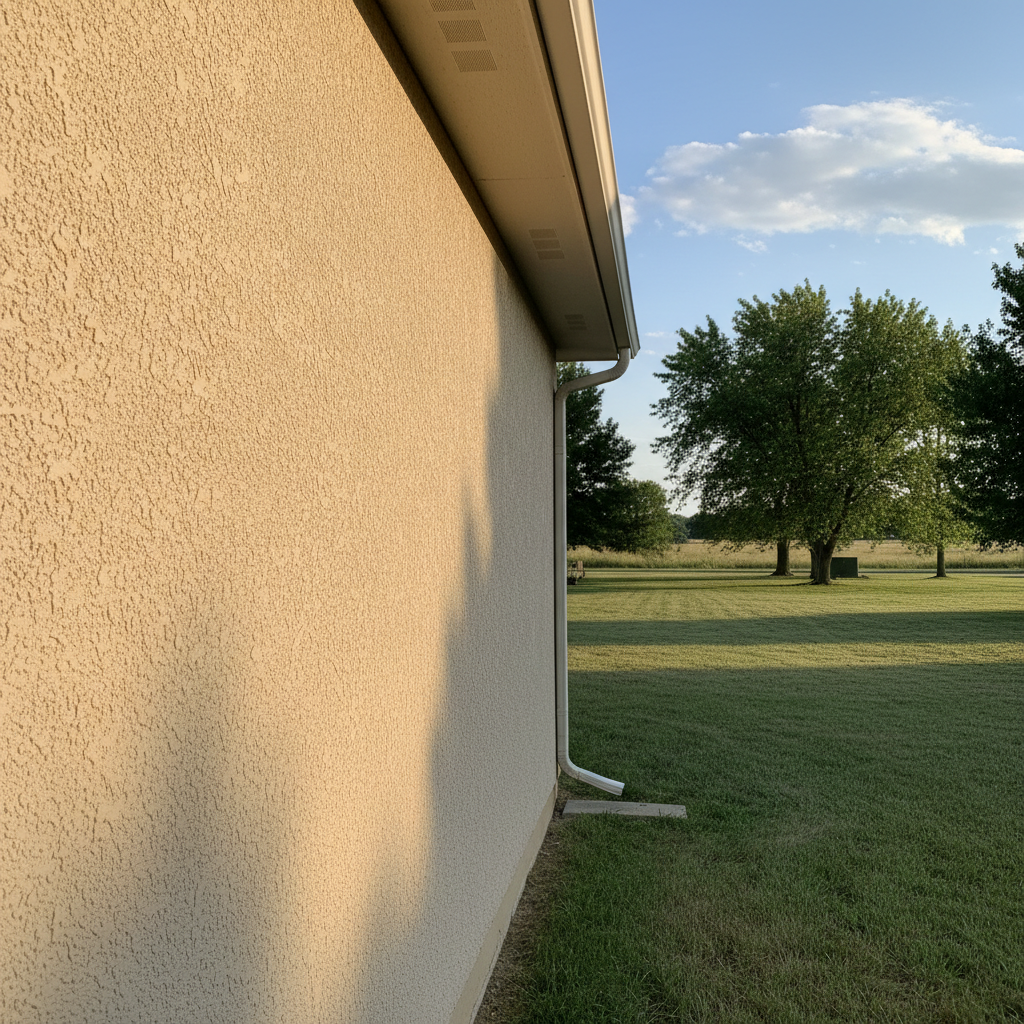
You've got stucco on your Wichita home, and that's a smart choice, honestly. It's tough, looks great, and can really stand up to our crazy Kansas weather. But "tough" doesn't mean "you can just forget about it." Just like anything else, a little regular attention goes a long way toward keeping your stucco looking good and protecting your investment. I've seen countless homes around College Hill and Riverside where a small issue turned into a big, expensive headache because people just didn't know what to look for. So, here's what you need to know to keep your stucco strong.
Extend the Life of Your Stucco
The biggest thing you can do to make your stucco last? Manage water. Water is the enemy of stucco, especially when it sneaks behind the finish. This is true everywhere, sure, but with our freeze-thaw cycles here in Kansas, any trapped moisture can expand and contract, causing cracks and delamination. So, first things first: make sure your gutters and downspouts are clean and directing water well away from your foundation. I'm talking at least five feet out. If water is constantly splashing up against the stucco from the ground, or running down the walls, you're just asking for trouble.
Also, keep an eye on your landscaping. Bushes and trees that are too close to the house can trap moisture against the stucco, prevent it from drying out, and sometimes even cause physical damage. Trim them back, give your walls some breathing room — you want good airflow around the whole structure. Another thing I always tell people is to be careful with pressure washing. A light rinse with a garden hose is usually fine for cleaning, but high-pressure washers can damage the stucco surface, forcing water into places it shouldn't be and potentially eroding the finish. If you need a deeper clean, try a soft brush and a mild detergent, then rinse thoroughly.
Regular Maintenance: What to Look For
You don't need to be a stucco expert to do a quick check-up. I'd say at least twice a year, maybe once in the spring after the snow melts and again in the fall before winter sets in, take a walk around your house. Get up close and personal with your stucco. What are you looking for?
- Cracks: Hairline cracks are pretty common and usually not a huge deal, especially with traditional stucco. But if you see cracks wider than a credit card, or if they're running in a spiderweb pattern, or if they’re around windows and doors, that's a red flag.
- Discoloration or Stains: Dark streaks, especially under windows, near the roofline, or around vents, often mean water is getting in and running down the wall. Green or black spots could be mold or mildew, indicating persistent moisture.
- Bulges or Soft Spots: Press gently on the stucco in different areas. If it feels soft, spongy, or you see any bulges, that's a serious sign of water damage behind the stucco. This is where you might have dry rot or other structural issues brewing.
- Missing or Damaged Sealants: Check the caulk around your windows, doors, and any penetrations like pipes or electrical conduits. If it's cracked, peeling, or missing, water can easily get behind the stucco.
- Efflorescence: This is that white, powdery substance you sometimes see on masonry. It's mineral salts left behind when water evaporates from the stucco. It means water is moving through the wall, which isn't ideal.
If you find any minor cracks or failing caulk, you can often handle those yourself with a good quality elastomeric caulk designed for stucco. Just make sure the surface is clean and dry before you apply it.
When to Call a Professional
Look, I'm all for homeowners tackling small projects. But there are definitely times when you need to bring in someone who knows what they're doing. If you see any of the more serious warning signs I mentioned – wide cracks, extensive discoloration, bulges, or soft spots – please, don't try to patch it yourself and hope for the best. That's usually just putting a Band-Aid on a much bigger problem.
When water gets behind stucco, it can cause significant damage to the sheathing, framing, and insulation underneath. A professional like us at Wichita Stucco & Plastering can properly diagnose the source of the water intrusion, repair the underlying damage, and then fix the stucco so it's not just a cosmetic patch, but a lasting repair. We've got the tools and the experience to make sure the job's done right, preventing future headaches and protecting your home's value. Ignoring these issues will only lead to more expensive repairs down the line, especially with our humid summers and wet springs here in Wichita. Don't wait until it's a crisis; a little proactive care and knowing when to call for help will save you a lot of grief.